
MCF horizons Podcast Series Ep.5: Unpacking Article 21c and its impact
What do the CRD VI third-country branch rules mean for non-EU banks and the Irish market?
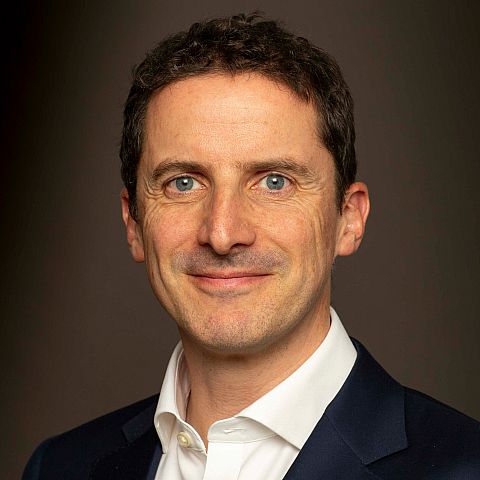
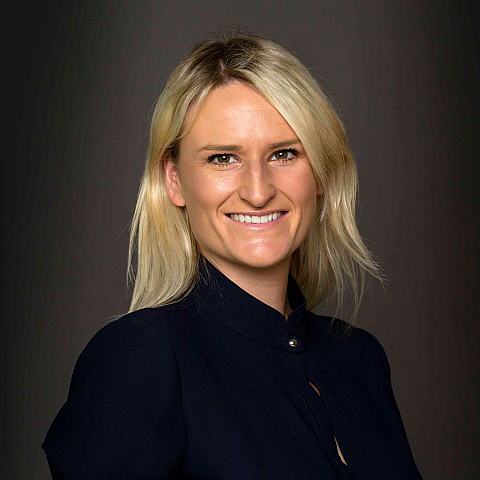
In this episode of MCF horizons, Adrian Farrell and Clare Gillett discuss the key considerations, available exemptions and emerging market trends under Article 21c and CRD VI.
Audio Transcript
Transcript available to view here, or in full below.
00:00 - 00:25
Welcome to MCF horizons, McCann FitzGerald’s podcast series, where we explore the legal and market developments, trends and policy milestones that are shaping today's landscape. Through conversations with our lawyers, we share practical, forward-looking insights to help organisations navigate change and make informed decisions. Now let's turn to today's episode. Hi, my name is Adrian Farrell. I'm a Debt Finance partner in McCann FitzGerald.
00:25 - 00:47
And today, as part of MCF horizons podcast, I'm speaking to my colleague Clare Gillett, Fin Reg partner, about Article 21(c) and all things CRD6. So Adrian we're here to talk about the third country branch requirement under Article 21(c) of CRD 6. And there's three things specifically I think we're going to talk about. We're going to talk about what is the requirement and what the rationale is for it.
00:47 - 01:08
We're going to talk about the exemptions, both enumerated blackletter law and unenumerated. And then we're going to talk about some of the key market trends that we're seeing happen, both in industry and on the financial regulation side of things. And before we get into the weeds on that Clare, you might just give a bit of background. Why has CRD6 and Article 21(c) been implemented in this way
01:08 - 01:30
and what's it trying to do? Yeah of course. So before CRD6, before this was introduced or signed into law in 2024, there was a real patchwork of regulatory regimes that existed in the EU. So lending to corporates in Ireland has always been unregulated. You can do it freely whether you're a non-EU bank, a non-EU entity or an Irish unregulated entity.
01:30 - 01:51
But that wasn't always the case across the EU. So it was possible to set up a third country branch in various different jurisdictions. So there was no common rules for third country branches in the EU. And that led to two kind of particularly thorny issues for the EU. The first is regulatory arbitrage. So third country banks were picking and choosing where they were going to set up.
01:51 - 02:12
And then when they did set up those branches, there was no cross-border communication. So you set up a branch in Germany. If that carries out services in France, the French regulator doesn't know what's happening in the German one. But wait a second, can you do that? If you've got a branch can you passport services cross-border? No, but you may be able to provide services, as you can in Ireland, on an unregulated basis.
02:12 - 02:32
So there's no harmonisation across the EU. Regulatory arbitrage, and that lack of transparency and sharing of information which is so key to regulation in the EU. Got it. And last time I checked there weren't many, if any, third country branches in Ireland. Where was all this happening? So I think most of it was happening in Germany. But you might correct me.
02:32 - 02:48
I think you might know a little bit more about this than I do. High level, I understand there's a lot of branches in Germany, France. Third country banks were looking to access the banking markets there, and the local rules require them, if they wanted to provide services into that jurisdiction, they needed to establish a branch.
02:48 - 03:08
So we, as you say, we had this patchwork quilt of different local regimes. Inconsistency. There was a supervisory concern that there could be regulatory arbitrage because some groups had a branch. They also had a credit institution, and they had an unregulated business and they didn't really know what was going on. And it was, you know, a general concern that they couldn't fully understand what was happening.
03:08 - 03:27
So I guess the high level I'm understanding it's to conform the rules. Yeah, absolutely. And look, this was a known problem. And the EU and the Commission said, yeah, it's a known problem, but we've got bigger fish to fry so we won't deal with it right now. And then of course 2016, the Brexit vote happens. And suddenly there's a catalyst to actually get this all straightened out.
03:27 - 03:44
And so the legislative train starts to run then. Wheels are put in motion to get the drafting started. And then ultimately we have the text published in 2026, and it's going to come into full force and effect in January of next year. So Clare, there's been a lot of chat about it. What does Article 21(c) actually say?
03:45 - 04:02
So if you're a non-EU bank providing core banking services in a Member State, you need to set up a branch or go the full whole hog and get a full credit institution authorisation. Can I stop you there, Clare? What's core banking services? In my mind - I'm a transactional lawyer - if you ask me, ‘what’s banking?’, it’s taking deposits.
04:02 - 04:21
If you're taking deposits that needs to be regulated, and that's been the way forever in Ireland. Maybe if you're providing a guarantee or a letter of credit, that feels like that's a regulated activity, but lending to a corporate on its own without deposit-taking, we wouldn't view that as banking. No, correct. And look, this is the whole nub of the issue.
04:21 - 04:41
So the core banking services are deposit-taking, lending and guarantees and commitments. And as you say, lending is the only one there that is not currently regulated in Ireland. And that's what's causing all the issue. Got it. So that's the requirement. Maybe you give us a bit of context as to what the impact is going to be on Ireland, particularly as a financial intermediation hub in the EU.
04:41 - 05:03
Yeah. No, that's a good prompt. I guess if you look at the various jurisdictions, Ireland and possibly Luxembourg are probably the main centres for financial intermediation - there are a lot of cross-border financial transactions happening in Ireland. And the fact that lending from third country banks is not currently regulated, or was not regulated to now, probably helped that and made it a smoother process and a better jurisdiction.
05:03 - 05:20
And to give you real-world examples of where it comes into play. So there's a lot of foreign direct investment in Ireland, particularly in the tech and pharma sector. You would have American multinationals establishing a presence in Ireland with manufacturing, head office, treasury functions. And quite often they'll have a borrower in the group set up in Ireland.
05:20 - 05:38
And the wider group will have banking relationships in North America. And those lenders will be keen to continue to support the corporate in its endeavours in Ireland. So you'll have a borrower in Ireland borrowing from US banks. Up until recently, that was completely unregulated. But now those lenders will really need to think about things and how they can continue that business.
05:38 - 05:59
The other examples would be aircraft finance. It's the main centre, probably globally for aircraft finance - Ireland. Dublin has been for 30 / 40 years, and while there are non-bank lenders in that space, there are international banks who are specialists in that area, and many of them will be from outside the EEA. And they too will need to think about their business models, how they can continue to lend.
05:59 - 06:23
And the good news is, there will be ways for them to continue to do that. The other big sector that is potentially impacted, but probably less so, will be structured finance and securitisation. So the Irish SPV is probably the most prevalent vehicle in Europe in terms of financial intermediation, securitisation and the like. And that type of entity has the flexibility to raise finance, not through bank loans, but sometimes they do borrow from banks.
06:23 - 06:44
But again, you know, the sense is from talking to clients, counterparts, there will be avenues and ways for that part of the market to continue, with minimal interruption. Let's get into that later on. So let's talk about maybe the exemptions that are available to ease the kind of pressure on that financial intermediation in Ireland. Well, there's a couple of easy ones which we don't need to focus on too much right.
06:44 - 07:06
So intergroup - that's exempt and that's fine. Let's not dwell on that. That's hopefully relatively straightforward. So if you're a third country bank lending to one of your own group in Europe, that should be fine. Devil's in the detail. If you are lending to another bank in Europe, then that's fine too. So a European bank receiving a loan from an Asian or US bank.
07:06 - 07:23
That's fine. That's cool. We don't need to think about that. That's potentially helpful in the context of sub-participation structures if you're interested in that. But I think the key exemption that we're hearing the market talk about and people putting more confidence on, is reverse solicitation. Can you tell us a little bit about that and what that means in practice?
07:24 - 07:44
Yeah. So reverse solicitation is where a client or counterparty approaches the non-EU bank at its own exclusive initiative. And there's certain rules around that. So the non-EU bank can't hire someone to go out and market for it. It can't have an agent that goes out and tries to solicit business. It can't cross-sell once it does have that initial contact.
07:44 - 08:04
But we're seeing reverse solicitation is well-established in the MiFID regime. Yeah. It's interesting when we explained the issue to borrower clients, to large aircraft lessor companies, big corporates, and we say, ‘hey, you may need to rely on this exemption’. We explain what it means in practice. And quite often they go ‘that's exactly what we're doing already’.
08:04 - 08:23
So there may not be too much of a change. What things do they need to be careful about? Yeah. Well, I think the main thing is the carve-out from the exemption, which says that if you have someone that's soliciting business on your behalf, then you don't benefit from the reverse solicitation exemption. So that's someone soliciting for the third country lender?
08:23 - 08:43
Correct. But potentially, and maybe there's a lack of clarity here in the Regs – they don't go into the detail - but could a borrower in Ireland appoint someone to find money for it? Well in that case that borrower has appointed its agent and that agent is acting qua borrower. So that wouldn't be someone acting on behalf of the non-EU banks.
08:43 - 09:05
So to my mind, reverse solicitation would still apply. It's still potentially available. Fantastic. Okay. And the marketing piece is interesting. We're talking to some clients on the ground in Ireland. They've seen a noticeable falloff in marketing activity from some of their relationship banks. There are less relationship calls, less requests for meetings. And in some cases they're quite happy about that.
09:05 - 09:27
They can get on with their day job. So corporate lending - it sounds like reverse solicitation is most likely the solution. Are there any other exemptions in the legislation that we should talk about? So there's one further exemption that's actually set out in law. And that's the MiFID exemption. So as it stands there's already a safe harbour for non-EU firms that are providing services in Ireland.
09:27 - 09:49
But now there's one that applies at the EU level. So basically a non-EU bank may provide MiFID services. So that's anything set out in Schedule 1 of the Annex to MiFID without needing to establish a third country branch. There's some debate on whether ancillary services set out in Part B of that Annex applies. The general market trend is that, yes, it is supposed to be captured.
09:49 - 10:06
It's just not set out explicitly, but we are hopeful that that will be clarified in an EBA Q&A or some other guidance issued by the Commission in due course. Got it. So that's MiFID. So they’re the exemptions that are set out in the text. I'm hearing people talking about another potential exemption. Do you want to tell us a little bit about that?
10:06 - 10:32
Yeah. So this is this kind of unenumerated exemption of characteristic performance. And characteristic performance is essentially the non-payment element of a contract. So for a sale of goods or supply of services, it's usually where the supplier or the seller is located. And people talk a lot about this being kind of an esoteric concept that exists in some Member States and not others, but actually it's enshrined in Article 4(2) of the Rome Regulation.
10:32 - 10:54
So it is a fully established concept of European law. Got it. And I haven't heard people talk about it in Ireland too much in the financial services context. Yeah. Why was that? We didn't need to. So we didn't regulate lending. So why would we need to kind of do the mental gymnastics of figuring out where the characteristic performance of a large syndicated deal was?
10:54 - 11:09
Is it where the account bank is? Is it where one of the lenders is? How do we get to that? We just didn't need to think about it. But now people are thinking about it - less so in Ireland and more in places like Luxembourg. But it's important to say that the way that Luxembourg has implemented Article 21 is the exact same as in Ireland.
11:09 - 11:35
It's a copy out of the actual legislation. So this concept of characteristic performance isn’t set out in Luxembourg law either. Got it. It sounds complex, maybe potentially available for a very specific set of circumstances where reverse solicitation isn't obviously available. Probably want to get detailed advice on. Yeah, that's exactly it. Okay. So we've gone through the exemptions. It sounds like it's causing some ripples in Ireland.
11:35 - 12:01
But there are really good helpful solutions. Yeah. Are there any other practical structural solutions that you're hearing people talking about. I mean, the obvious one is set up a new bank. So there has been a big uptick in the amount of credit institutions which are applying in Ireland. You had one authorised last year. There's at least three in the formal application process, and we're receiving queries from other entities which are thinking of establishing in Ireland.
12:01 - 12:23
So actually it's a good news story from an Irish competitiveness perspective. Excellent. Tell me, why are these guys establishing in Ireland. Why can't they avail of one of the exemptions? Are they doing something different? Some of them are doing something different. Some of them it's not CRD6 play. For those that do need to establish a bank for CRD6, they are already well in train because obviously January is the deadline.
12:23 - 12:52
So no, we're just seeing a lot more interest in setting up in Ireland. It's the usual reasons. It’s tax. It's a good workforce, particularly those skilled in AI and technology. We're seeing that as a huge draw for Ireland. Got it. And I think if I'm thinking of there's probably good examples of very large third country banking groups who already have an EU solution ready-made because they have an EU credit institution, and perhaps we'll see them using that institution more for European lending business.
12:52 - 13:13
Now that's the big bang obviously. Establishing a credit institution is no easy feat, but there are other, less expensive and less time-consuming ways to operate in Europe, particularly on a cross-border basis. One of those is you can set up a loan origination AIF. So a loan origination fund can freely provide services and lend across the EU, and that's a regulated product.
13:13 - 13:32
Some international banks will set up a new bank in Europe. That sounds like a good solution for them. If they have a large amount of European business and they want to do direct marketing. What about setting up a third country branch in one of the Member States? Is that a useful solution? Yeah, you can do that. But the consensus is it is a huge lift.
13:32 - 13:56
It's almost like a fresh de novo credit institution, but without the benefits of the passporting rights. So why bother? Got it. So if I'm heading that direction, if I have a choice, go for the full bank authorisation so I can passport? Got it. What about loan origination funds? Could they be a solution for cross-border lending? Yeah, absolutely. So a loan origination fund is an excellent way to carry out lending on a pan-European basis.
13:56 - 14:25
It's a regulated product. It's recently been revamped by the EU so that it's fit for purpose and it can freely lend across the EU. So yes, a loan origination fund is an excellent product. So that's the loan origination fund. But there are other ways to carry out lending in the EU. Yeah. So specifically in the Irish context, it's probably important to remember that if you're not a third country bank, if you're a non-bank lender, you can still freely lend to corporates in Ireland.
14:25 - 14:48
That has not changed. And in the last decade or so, a significant part of the lending market in Ireland has been taken up by credit funds. We have a lower absolute amount of banks in Ireland. Some of them don't have risk appetite for particular sectors and non-bank lenders have come in instead to fill that gap and that can continue.
14:48 - 15:11
This will not be interrupted by CRD6 Article 21(c). And then for other alternative structures, alternative lenders, we still have the Irish SPV product. And if there are challenges around making a loan to that type of entity, there is always the alternative of issuing a debt instrument which is a transferable security. And that's going to be a common solution, I think, in the structured space.
15:11 - 15:34
So we probably expect Article 21(c) to have less of an impact in structured finance generally. So it all sounds like it's a relatively positive story in Ireland. There are market solutions there already. There's a real expectation that the large loan market will move towards reverse solicitation and that will be used in practice. I'm also hearing it should have limited impact on the other significant sectors.
15:34 - 15:52
SPV structures. There will be solutions. Aircraft finance, large borrowers. They seem to be comfortable with reverse solicitation as a model. They’re just getting on with it really. Yeah. People are getting on with it. But let's see. Let's keep an eye on things and see how things develop. Clare, listen, thank you so much for sharing those insights. Let's keep an eye on this developing area. That's been a really great conversation
15:52 - 16:07
and let's continue working with clients to find solutions. Thank you. It's been a pleasure. Thank you for listening to MCF horizons. For more insights and updates, visit mccannfitzgerald.com, and don't forget to subscribe to stay up to date with future episodes.
This document has been prepared by McCann FitzGerald LLP for general guidance only and should not be regarded as a substitute for professional advice. Such advice should always be taken before acting on any of the matters discussed.
Select how you would like to share using the options below